Dal calories and protein: per katori and in 5 dishes.
Dal is one of the easiest ways to get protein and fiber into an everyday meal, and one of the hardest to log, because no two pots are the same. Here are the numbers for plain cooked dal, what the tadka adds, and five everyday dishes, all from the recipes in GymTribe's food catalog.
3 min read
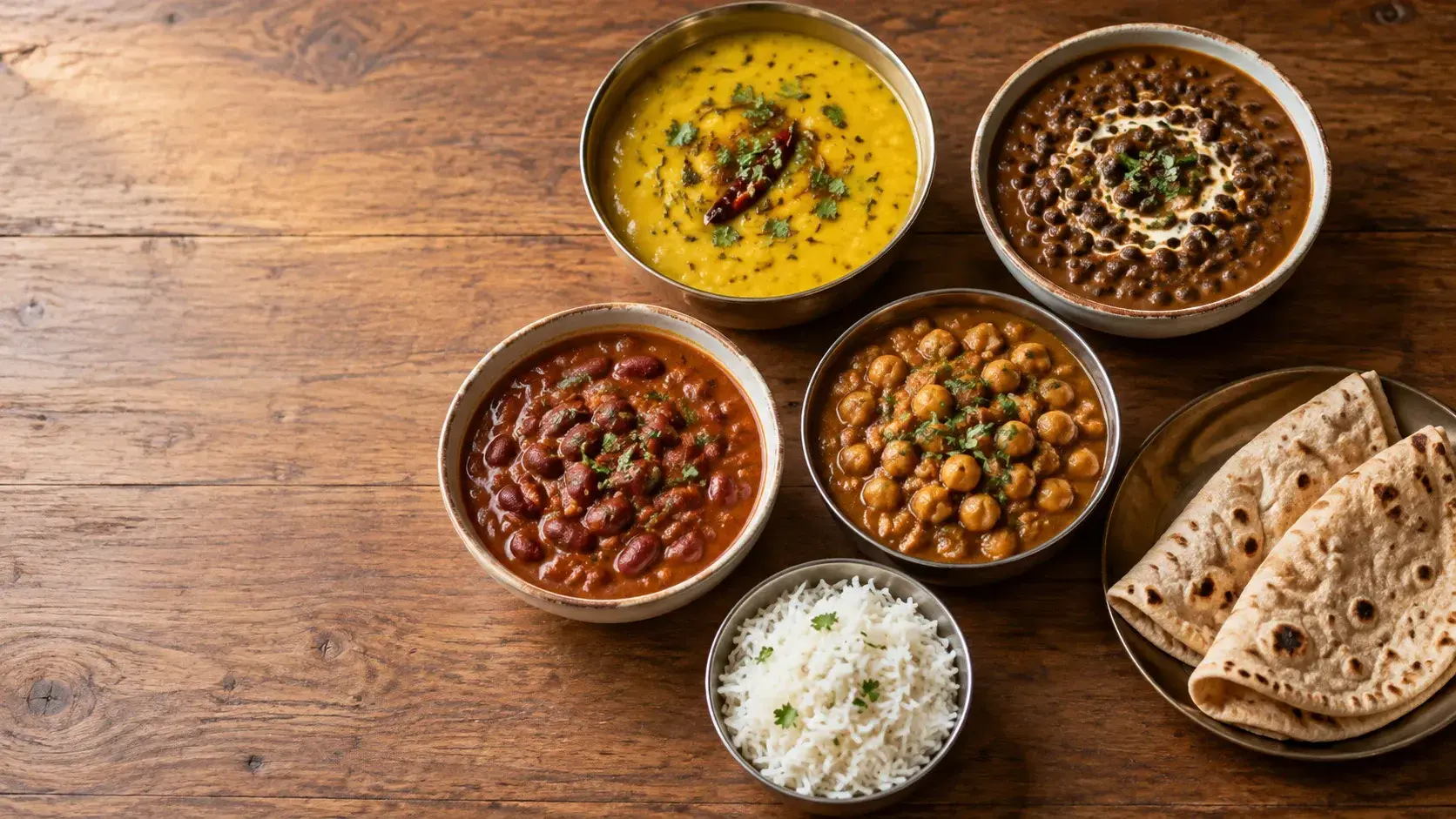
01 / Plain dal
How much is in a katori of dal?
GymTribe's food catalog calculates nutrition from USDA FoodData Central reference values. Cooked lentils come to about 116 calories and 9 g of protein per 100 g. A katori holds anything from 100 to 200 g; at 150 g, a katori of plain cooked dal is about 175 calories and 14 g of protein, before the tadka.
If you weigh lentils before cooking, use the dry value instead: about 350 calories and 25 g of protein per 100 g of dry split moong dal or mixed lentils. Weighing the dry dal and dividing the pot by the bowls you serve is the most accurate way to log a home-made dal.
The tadka moves the number most. A tablespoon of ghee or oil adds about 120 calories and a tablespoon of butter about 100, almost all of it fat. Thicker dal also has more lentils in each katori than a thin one.
02 / Side by side
Five dal and bean dishes, one serving each.
| Serving | Calories | Protein | Fiber | Protein per 100 calories | |
|---|---|---|---|---|---|
| Moong dal chilla | 220 g | 450 | 25 g | 17 g | 5.6 g |
| Mixed dal with roti | 270 g | 460 | 22 g | 13 g | 4.8 g |
| Chole with roti | 275 g | 470 | 19 g | 17 g | 4.0 g |
| Rajma with rice | 455 g | 540 | 18 g | 12 g | 3.3 g |
| Dal makhani with paneer | 545 g | 790 | 47 g | 23 g | 5.9 g |
A serving is one portion as the recipe makes it. Mixed dal, chole and rajma each make two servings, with the roti or rice included. Protein per 100 calories is a quick way to compare dishes of different sizes.
03 / Why they differ
What changes the number.
- What it is served with. Roti and rice bring most of the carbs. Two servings of mixed dal or chole share 100 g of whole-wheat flour for the roti; two servings of rajma share 150 g of basmati rice.
- The fat in the tadka. Mixed dal uses a tablespoon of ghee for two servings, chole and rajma a tablespoon of oil, and moong dal chilla two teaspoons of oil. Dal makhani adds a tablespoon of butter and 60 ml of milk.
- Added paneer. Dal makhani with paneer has 100 g of paneer on top of its black lentils, which is why it leads on protein, 47 g, and on calories, 790.
- Lentils or beans. Moong dal chilla is made almost entirely of split moong dal, so only dal makhani, with its paneer, has more protein per calorie. Rajma and chole use kidney beans and chickpeas and come with rice or roti, so they have less.
04 / Logging it
How to log your own dal.
Home versions differ, so treat these numbers as a starting point. In GymTribe, find the dish in the food catalog and set the amount you ate; the nutrition scales with it. For a pot made your own way, photograph your bowl with the AI calorie counter and check the portion before saving.
Each dish has its own recipe page with ingredients and steps: moong dal chilla, mixed dal with roti, chole with roti, rajma with rice and dal makhani with paneer. For paneer dishes, see paneer calories and protein.
Keep it simple
Measure your katori once.
Weighing your usual katori of dal once makes every later log closer to what you ate. These numbers come from GymTribe's recipes; they are estimates, not medical or clinical nutrition advice.