Paneer calories and protein: 7 everyday dishes compared.
Paneer is an easy way to add protein to a vegetarian meal, and an easy one to under-count. The same block of paneer can end up in a 470-calorie breakfast or an 840-calorie bowl. Here are the numbers for plain paneer and for seven everyday dishes, all from the recipes in GymTribe's food catalog.
3 min read
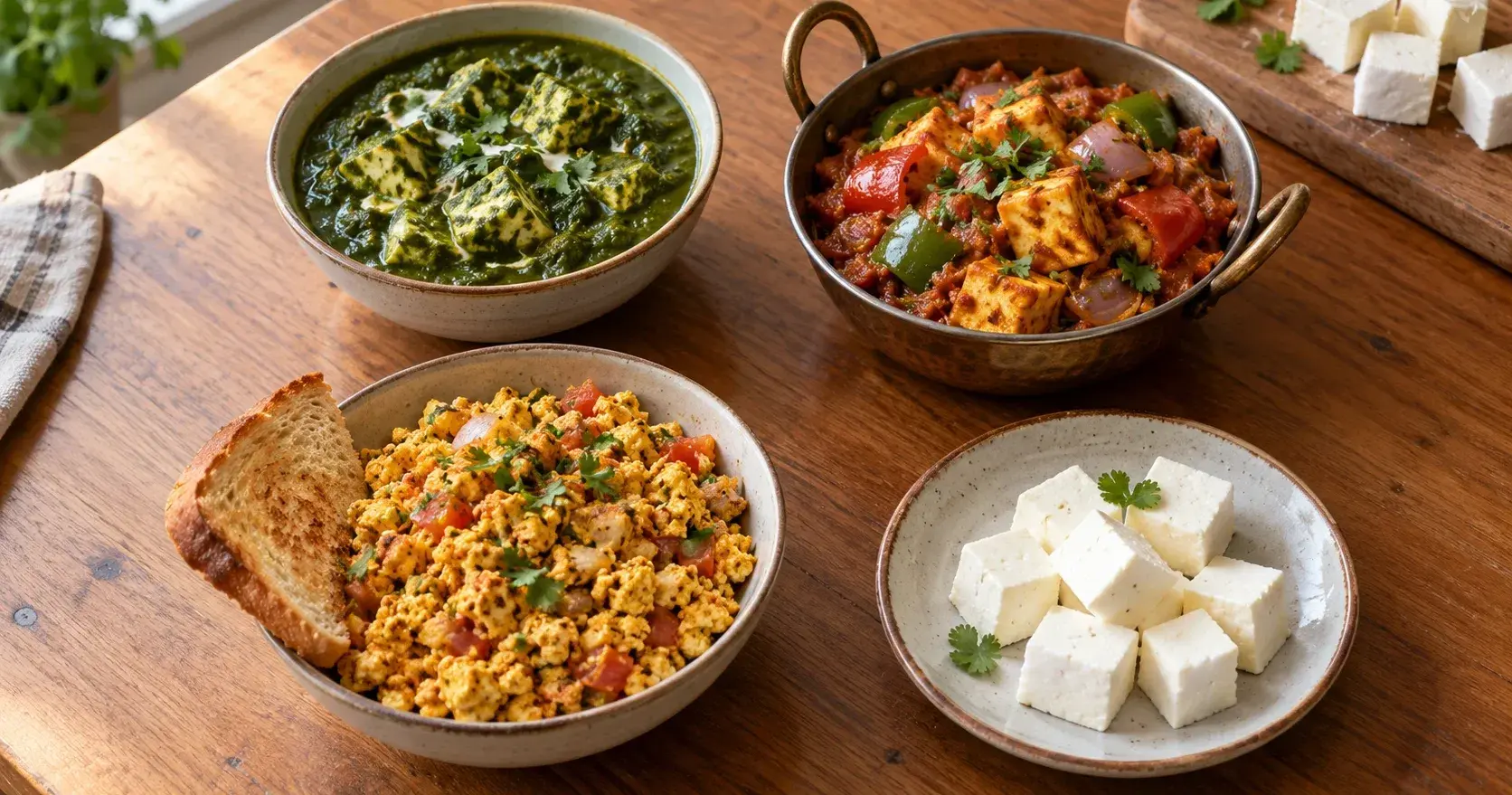
01 / Plain paneer
How much is in 100 g of paneer?
In GymTribe's food catalog, which calculates nutrition from USDA FoodData Central reference values, 200 g of paneer with a teaspoon of oil comes to 650 calories and 40 g of protein. That puts plain paneer at roughly 300 calories and 20 g of protein per 100 g, with most of the rest coming from fat.
Paneer varies by brand and by how it is made, and full-fat and low-fat paneer can differ a lot. If you buy it packaged, the label on your pack is the number to use. Scan the barcode in GymTribe and it fills in the product's nutrition for you to check before saving.
02 / Side by side
Seven paneer dishes, one serving each.
| Serving | Paneer in it | Calories | Protein | Protein per 100 calories | |
|---|---|---|---|---|---|
| Paneer cubes | 220 g | 200 g | 650 | 40 g | 6.2 g |
| Paneer bhurji with toast | 205 g | 100 g | 470 | 25 g | 5.3 g |
| Besan chilla with paneer | 500 g | 100 g | 710 | 39 g | 5.5 g |
| Kadai paneer | 555 g | 180 g | 780 | 40 g | 5.1 g |
| Dal makhani with paneer | 545 g | 100 g | 790 | 47 g | 5.9 g |
| Palak paneer | 390 g | 180 g | 810 | 45 g | 5.6 g |
| Paneer tikka bowl | 500 g | 180 g | 840 | 50 g | 6.0 g |
A serving is one portion as the recipe makes it. Paneer bhurji makes two servings from 200 g of paneer, so one serving has 100 g. Protein per 100 calories is a quick way to compare dishes of different sizes.
03 / Why they differ
What changes the number.
- How much paneer. The biggest difference. Besan chilla, dal makhani and one serving of bhurji use 100 g of paneer; kadai paneer, palak paneer and the tikka bowl use 180 g.
- The fat it is cooked in. Kadai paneer, palak paneer and bhurji each use a tablespoon of oil. Palak paneer adds a tablespoon of cream, and dal makhani a tablespoon of butter. The tikka bowl and paneer cubes use a single teaspoon of oil.
- What it is served with. Toast, quinoa, lentils and gram flour add calories, but also carbs, fiber and some protein. The lentils in dal makhani bring it to 47 g of protein and 23 g of fiber.
- How big the plate looks. Palak paneer is the lightest of the curries at 390 g, but has the most fat, 62 g. The spinach cooks down; the paneer, oil and cream stay.
04 / Logging it
How to log your own version.
Home and restaurant versions differ, so treat these numbers as a starting point. In GymTribe, find the dish in the food catalog and set the amount you ate; the nutrition scales with it. If your version is very different, for example more paneer or a creamier sauce, take a photo for an AI estimate and review it before saving.
Each dish has its own recipe page with ingredients and steps: paneer cubes, paneer bhurji with toast, besan chilla with paneer, kadai paneer, dal makhani with paneer, palak paneer and the paneer tikka bowl. For lentil dishes, see dal calories and protein.
Keep it simple
Weigh it once, then log by habit.
Weighing your usual portion of paneer once makes every later log closer to what you ate. These numbers come from GymTribe's recipes; they are estimates, not medical or clinical nutrition advice.