

Dumbbell vs barbell bench press
The flat dumbbell press and the barbell bench press are the same movement with different tools. Both target the mid chest in GymTribe, with the front delts and triceps helping. The barbell ties your hands together on one bar; the dumbbells let each arm move on its own and travel a little lower.
Short answer
Pick the barbell bench press to lift the most weight, add small steps over time and track a one-rep max. Pick the dumbbell press for a longer range of motion, free hand position and even work on each side. Most programs use the barbell as the main lift and dumbbells after it.
Dumbbell bench press
In the GymTribe library as Flat Dumbbell Bench Press
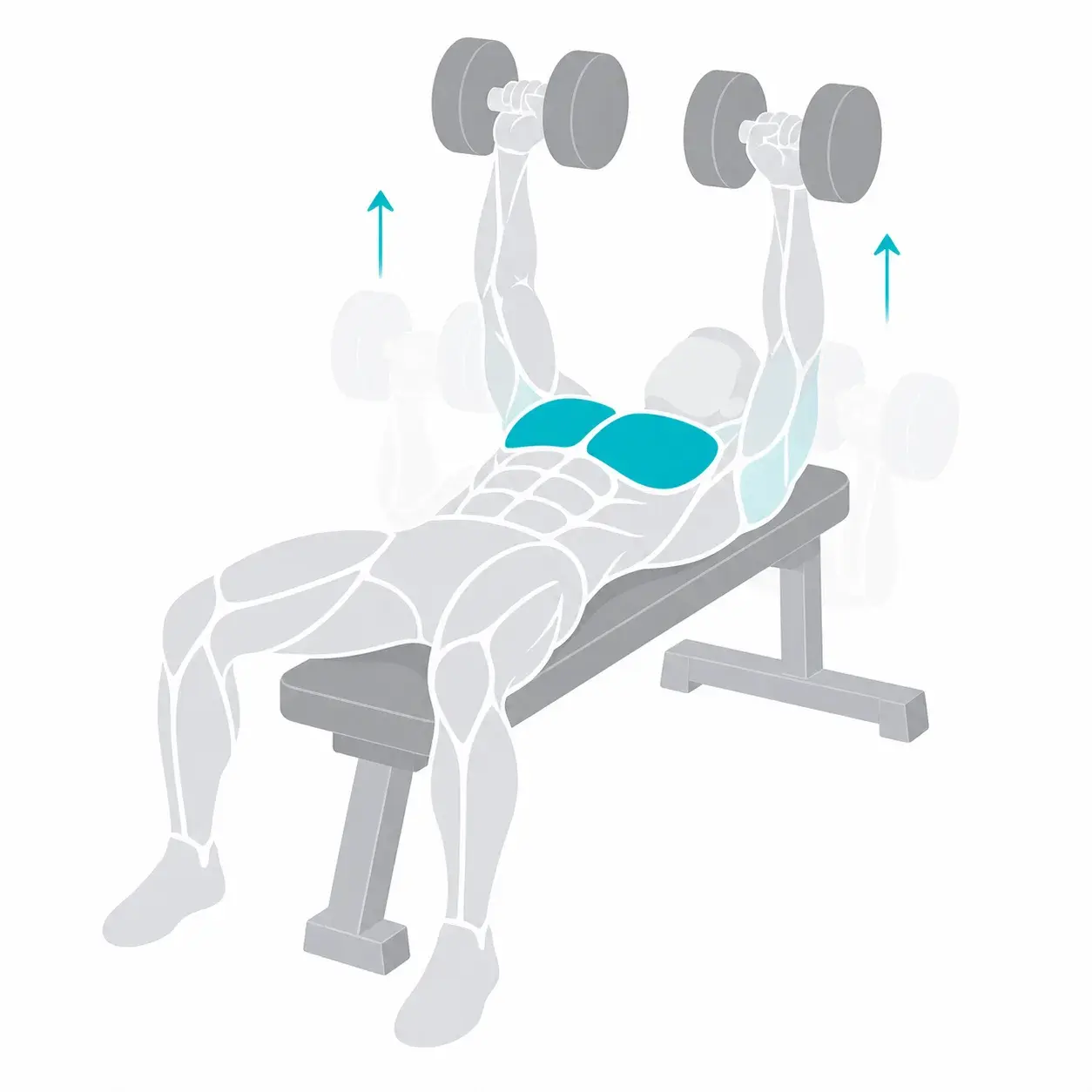
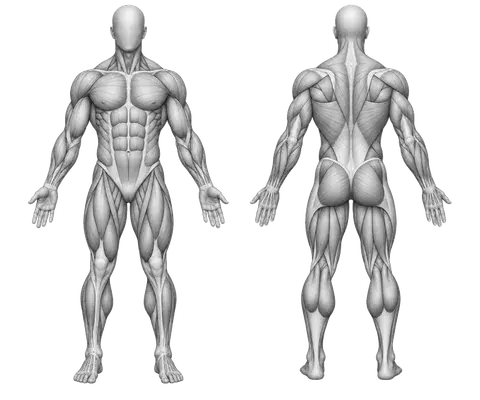



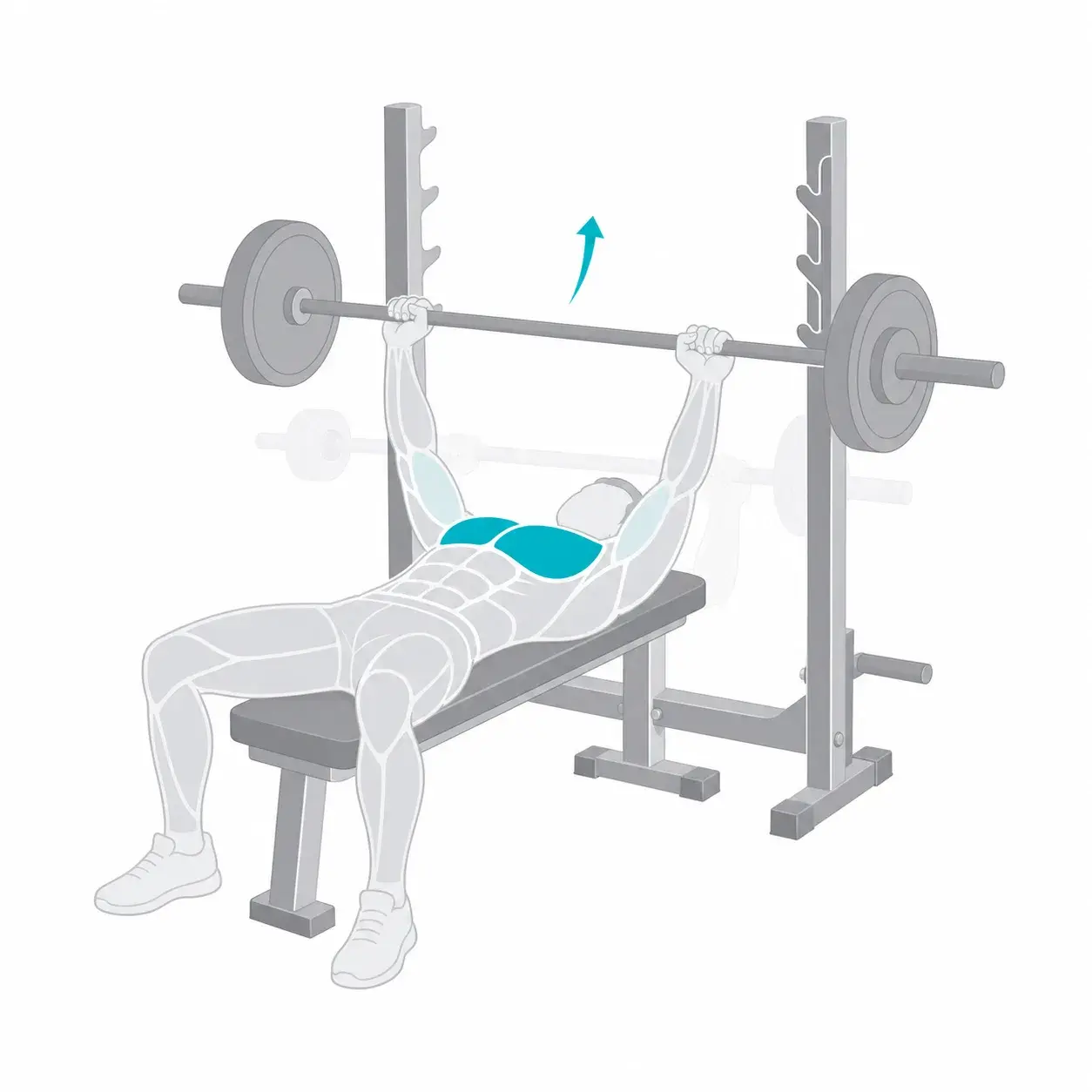
Side by side
| Dumbbell bench press | Barbell bench press | |
|---|---|---|
| Target muscle in GymTribe | Mid chest | Mid chest |
| Also works | Front delts, Triceps | Front delts, Triceps |
| Equipment | A pair of dumbbells and a flat bench | Barbell, flat bench and rack |
| Level in the app | Beginner | Beginner |
| Logged as | Weight and reps | Weight and reps |
What is different
- Range and hand path
- Dumbbells can go below the line of your chest at the bottom and come closer together at the top, and your wrists can turn to a comfortable angle. The barbell stops when it touches your chest and keeps your hands at a fixed width.
- How the weights compare
- You can usually press more with a barbell, because both arms share one stable bar. As a rough guide, many lifters find each dumbbell is about 35 to 40% of their barbell bench weight, so two dumbbells add up to less than the bar.
- Each side on its own
- With dumbbells, a stronger arm cannot help a weaker one, so differences between sides show up quickly. With a barbell, one side can take over without you noticing.
- Getting into position
- The barbell sits in a rack and you need a spotter or safety bars near your limit. Heavy dumbbells have to be kicked up to your chest from your knees, which becomes the hard part above moderate weights.
Which one to pick
Pick the dumbbell bench press when…
- You want a longer stretch at the bottom and a free hand angle.
- One side of your chest or one arm is stronger than the other.
- You train alone without a spotter or a rack with safeties.
Pick the bench press when…
- You want to lift the most weight and track a bench press max.
- You want to add weight in small, steady steps.
- You are training for powerlifting or a bench test.
Running both
A common chest day starts with the barbell bench press for 3 to 8 reps, then the dumbbell press for 8 to 12. If you only have dumbbells, the dumbbell press can be your main lift; log it as its own exercise so its numbers do not mix with the barbell's.
Track both and see which moves
Log the weight and reps of every set in GymTribe. Dumbbell bench press and barbell bench press each keep their own charts and personal records, and the muscle map shows how many sets went to each muscle this week, so you can see which lift is doing the work for you.

More comparisons
Technique here is common practice, not a prescription. If a lift hurts, stop and ask a qualified coach or clinician.
Dumbbell vs barbell bench press: questions people ask
Is the dumbbell bench press better than the barbell bench press?
Neither is better overall. Dumbbells give more range and even work per side; the barbell lets you lift more and add weight more steadily. The best choice depends on your goal and the equipment you have.
What is the dumbbell equivalent of a barbell bench?
There is no exact conversion, but many lifters find each dumbbell is about 35 to 40% of their barbell weight. Someone who benches 100 kg might press dumbbells of roughly 35 to 40 kg each. Test it with a few sets rather than relying on a formula.
Why can I lift less with dumbbells?
Each arm has to steady its own weight in every direction, and nothing links the two hands. That extra control costs some load, even though the muscles doing the work are the same.
Should I track dumbbell and barbell bench separately?
Yes. GymTribe keeps them as two exercises, each with its own history and estimated 1RM, so a dumbbell session never looks like a drop in your bench press.