Chicken curry calories and protein: per serving, and what changes it.
Chicken curry is one of the most searched dishes to log and one of the least consistent, because every kitchen makes it differently. Here are the numbers for a home-style chicken curry with roti from GymTribe's food catalog, and what moves them.
3 min read
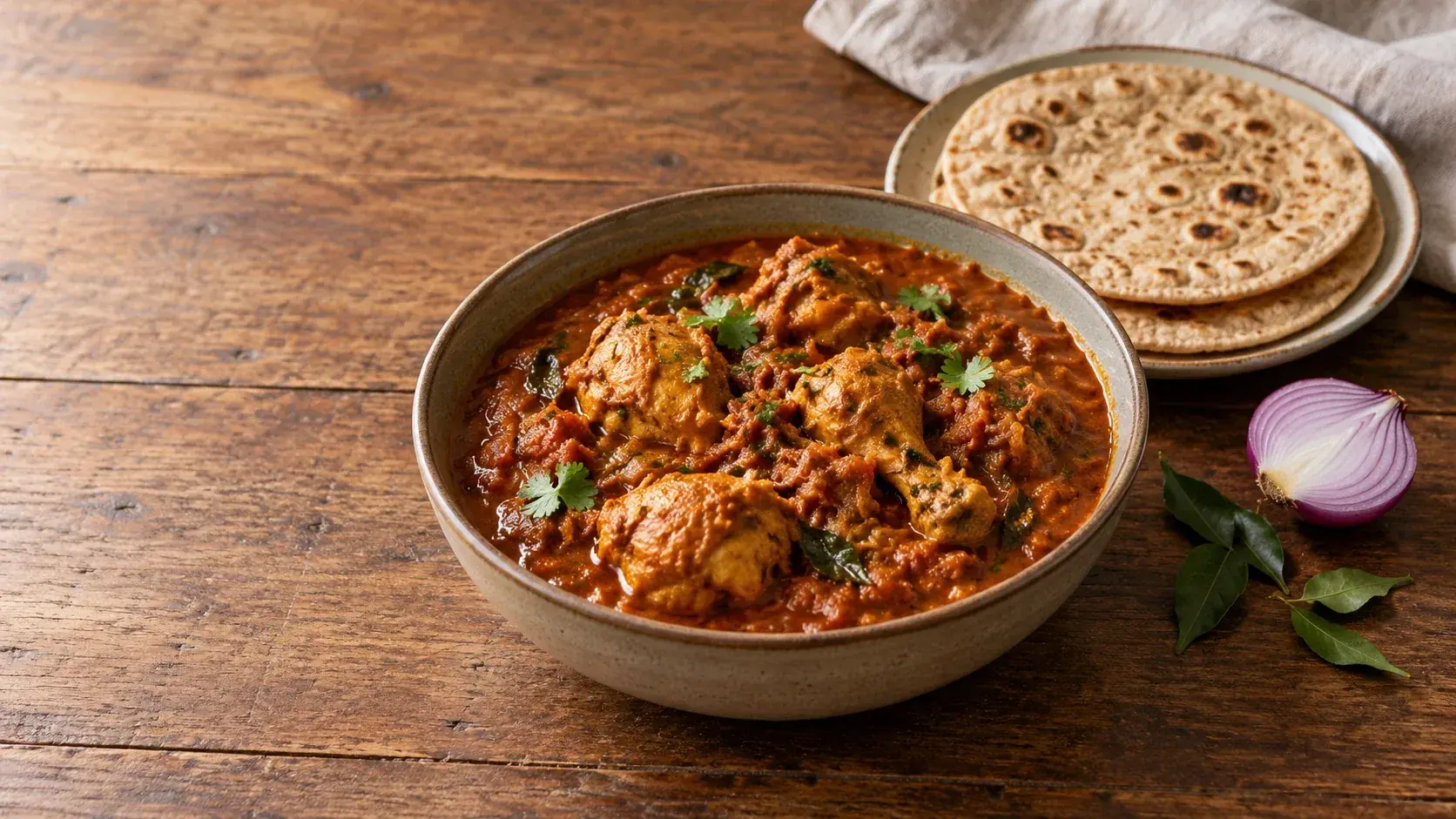
01 / One serving
How many calories and how much protein are in chicken curry?
GymTribe's chicken curry with roti makes two servings from 200 g of chicken pieces, 150 g of tomato puree, one onion, a tablespoon of oil and 100 g of whole-wheat flour for the rotis. One 245 g serving comes to 460 calories, 28 g of protein, 48 g of carbs and 18 g of fat, or about 188 calories and 11 g of protein per 100 g.
Roughly 170 of those calories and 7 g of the protein are the rotis, 50 g of flour each, which is about two small rotis depending on size. The curry itself, with 100 g of chicken and half the oil, is closer to 290 calories and 21 g of protein per serving.
The numbers come from USDA FoodData Central reference values. A curry made with more oil, a different cut or a bigger spoon of gravy will land somewhere else, so use these as a starting point.
02 / What changes it
The same curry, different choices.
| Calories | Protein | Fat | |
|---|---|---|---|
| As in the recipe (chicken pieces, two rotis) | 460 | 28 g | 18 g |
| Chicken breast instead of pieces | 408 | 32 g | 11 g |
| Bone-in chicken legs, 100 g as bought | 423 | 22 g | 17 g |
| Rice, 150 g cooked, instead of the rotis | 485 | 25 g | 17 g |
| One extra tablespoon of oil | 581 | 28 g | 32 g |
| 100 ml of coconut milk stirred in | 657 | 30 g | 39 g |
Each row changes one thing from the recipe and nothing else. Bone-in legs weigh more but give less meat, which is why 100 g as bought has less protein than 100 g of boneless chicken pieces.
03 / Where the calories go
Fat does more than the chicken.
- Oil and ghee. A tablespoon of oil is about 120 calories, almost all fat. The recipe uses one tablespoon for two servings, so a second tablespoon adds about 120 to each plate.
- Coconut milk and cream. 100 ml of coconut milk adds about 200 calories and a tablespoon of cream about 50. That is the difference between a tomato-based curry and a rich restaurant-style one.
- The cut of chicken. Chicken breast has about 120 calories per 100 g raw and chicken pieces about 172. Swapping 100 g of one for the other moves a serving by about 50 calories and adds about 4 g of protein.
- What it is served with. Rotis and rice bring the carbs. Two small rotis and 150 g of cooked rice are close in calories, so the portion matters more than the choice.
04 / Logging it
How to log your own chicken curry.
In GymTribe, find chicken curry with roti in the food catalog and set the amount you ate; the nutrition scales with it. If your curry is thicker, oilier or made with coconut, photograph the plate with the AI calorie counter, check the portion and edit the numbers before saving.
For other chicken dishes side by side, see butter chicken calories and protein, and for the grilled version, chicken tikka calories and protein.
Keep it simple
Weigh the oil, not the chicken.
If you weigh one thing when you cook curry, make it the oil. It changes the plate more than any other choice. These numbers come from GymTribe's recipes; they are estimates, not medical or clinical nutrition advice.