

Chin-up vs pull-up
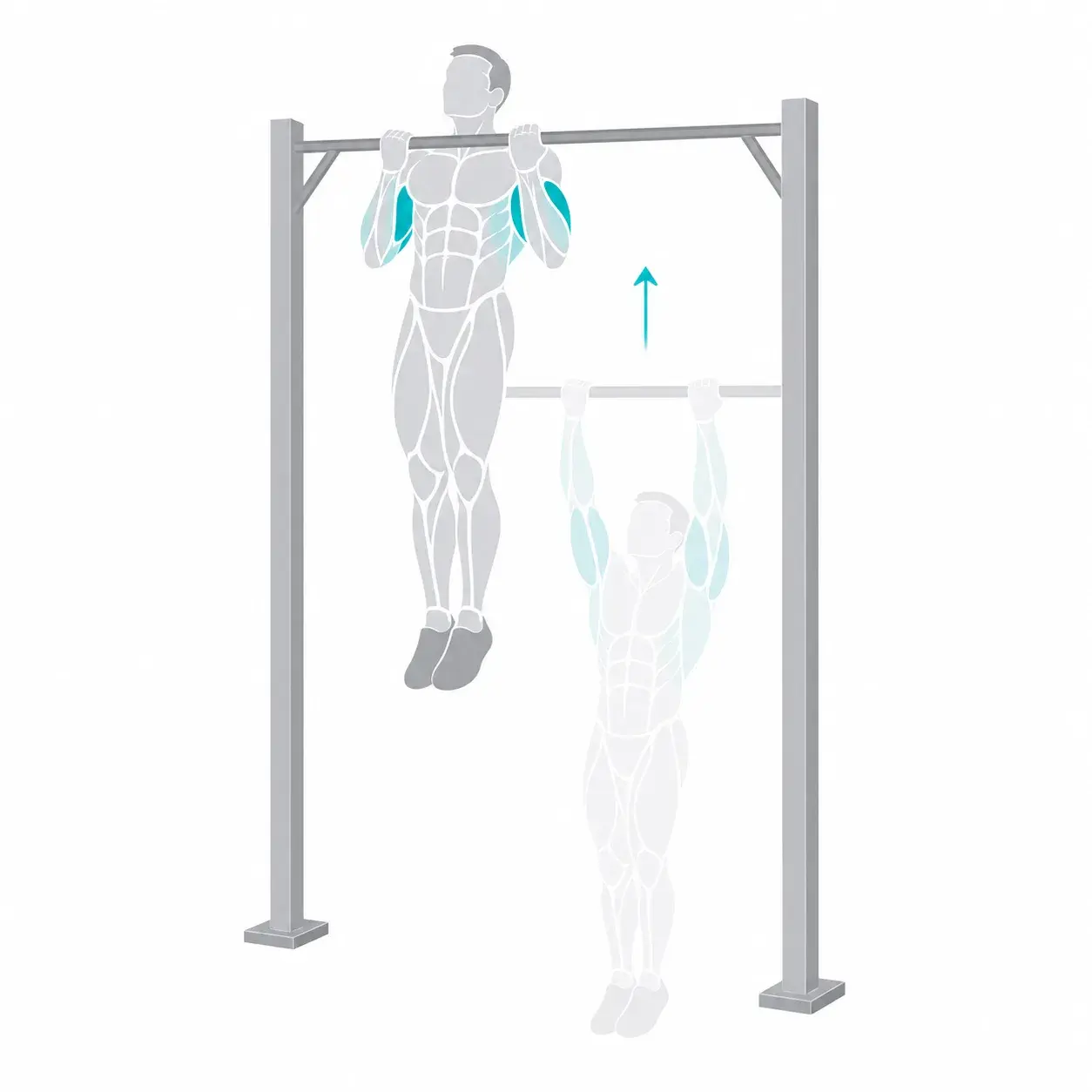
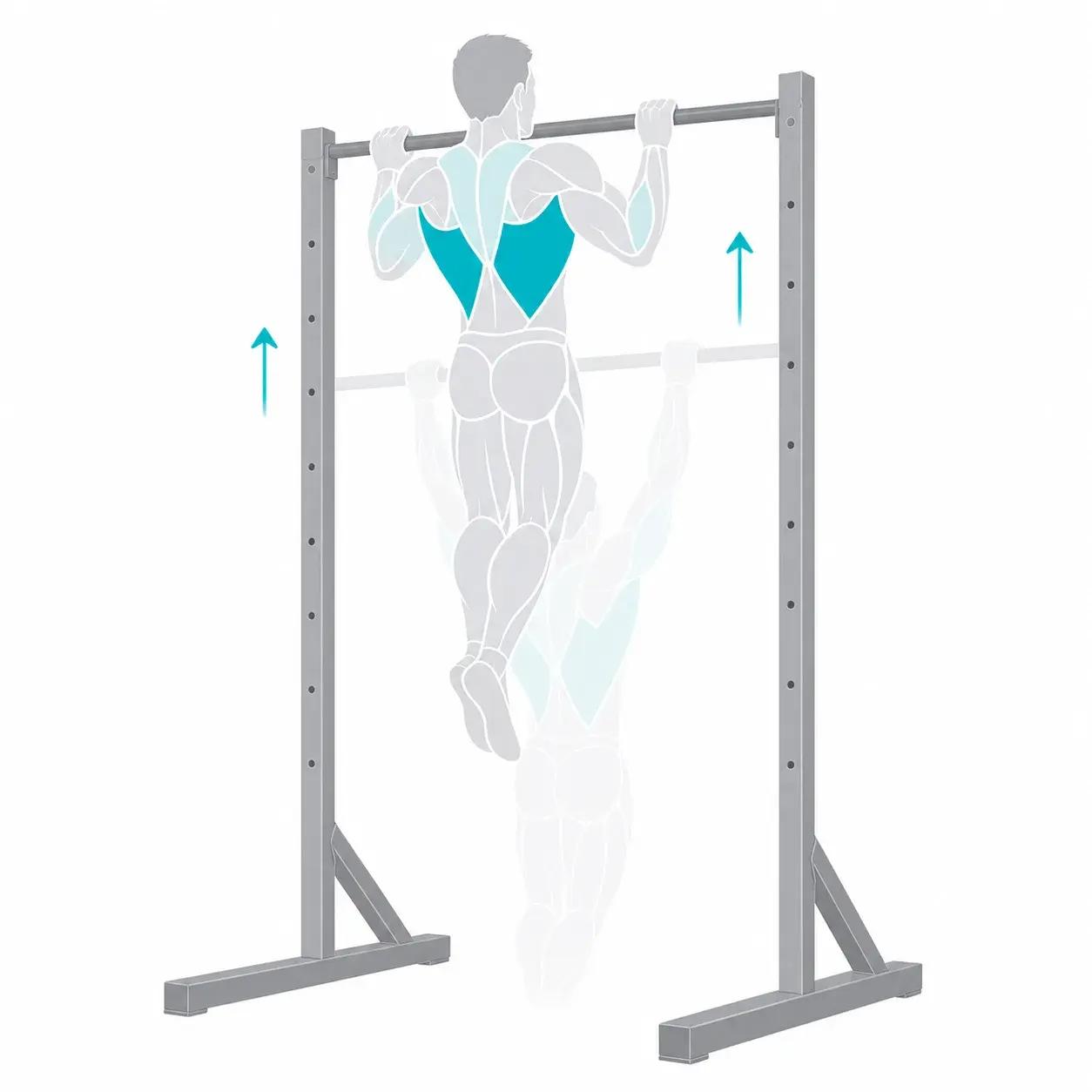
The only setup difference is the grip. Chin-ups use palms facing you, usually shoulder-width; pull-ups use palms facing away, usually a little wider. That changes how much the biceps help and how much the lats and upper back have to do on their own.
Short answer
Pick chin-ups for more biceps work and more reps; most people find them easier. Pick pull-ups for more lat and upper-back emphasis and the harder version of the movement. Both count toward the lats in GymTribe.




Side by side
| Chin-up | Pull-up | |
|---|---|---|
| Target muscle in GymTribe | Lats | Lats |
| Also works | Biceps, Upper back, Forearms | Biceps, Upper back, Rear delts, Forearms |
| Equipment | A pull-up bar | A pull-up bar |
| Level in the app | Intermediate | Intermediate |
| Logged as | Reps, weight once added | Reps, weight once added |
What is different
- Grip
- Chin-up: palms toward you, hands about shoulder-width. Pull-up: palms away, hands at or a little wider than shoulder-width. A neutral grip, palms facing each other, sits between the two.
- Which muscles help
- With palms facing you the biceps are in their strongest position, so they share more of the work and the chest and front delts assist. With palms away the biceps help less and the lats, rear delts and lower traps carry more.
- Difficulty
- Most people get one to three more chin-ups than pull-ups. If you cannot do a pull-up yet, chin-ups and lat pulldowns are the usual route to the first one.
- Elbow and shoulder position
- Chin-ups keep the elbows in front of the body; pull-ups move them out to the sides. People with cranky wrists or elbows often tolerate one grip better than the other, which is a fair reason to choose.
Which one to pick
Pick the chin-up when…
- You want the biceps to grow along with the back.
- You are working toward your first pull-up and need the easier version.
- A supinated grip feels better on your wrists or elbows.
Pick the pull-up when…
- You want the lats and upper back to do as much of the work as possible.
- You are training for a test that specifies pull-ups.
- You can already do 8 or more chin-ups and want a harder progression.
Running both
Alternate them week by week, or do the harder one first for low reps and the other second for more reps. Once you pass 10 to 12 of either, add weight with a belt and log it with the reps.
Track both and see which moves
Log the weight and reps of every set in GymTribe. Chin-up and pull-up each keep their own charts and personal records, and the muscle map shows how many sets went to each muscle this week, so you can see which lift is doing the work for you.

More comparisons
Technique here is common practice, not a prescription. If a lift hurts, stop and ask a qualified coach or clinician.
Chin-up vs pull-up: questions people ask
Are chin-ups or pull-ups better for the back?
Both train the lats hard. Pull-ups shift a little more of the work onto the lats and upper back because the biceps help less; chin-ups let you do more reps, which can add up to as much total back work.
Why can I do more chin-ups than pull-ups?
The palms-toward-you grip puts the biceps in their strongest position and brings the chest in to help. Most people get one to three more reps that way.
Do chin-ups work biceps enough to skip curls?
They work the biceps hard, especially with a shoulder-width grip. Many lifters still add a curl for direct volume, but chin-ups alone build noticeable arm size.
How do I log them in GymTribe?
Log reps for each set; once you add a belt, log the weight too. Each exercise keeps its own rep records and charts, and both count toward the lats in the muscle map.