
For personal trainers
How trainers keep clients accountable between sessions.
The work between appointments is easier to review when a client's records are visible in the coaching workspace. A useful system should reduce repeated status requests while leaving the trainer responsible for the conversation and the coaching judgment.
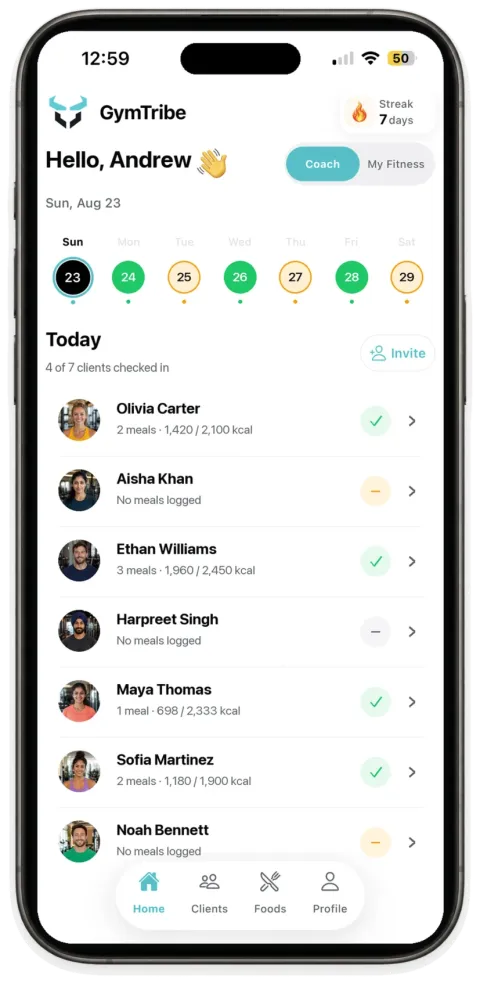
01 / Begin with a date
Review the day instead of asking for a retrospective.
Open the coaching dashboard, choose a date, and see which connected clients logged meals for that day. This gives a trainer a quick starting point before opening an individual client record.
A food check-in means a meal was logged. It is an activity signal, not a score, diagnosis, or conclusion about a client's effort.
02 / Stay in context
Move from activity to the client's actual record.
Open the client to review the meals they logged, compare the record with current nutrition targets, and make a target adjustment when the coaching plan calls for one.
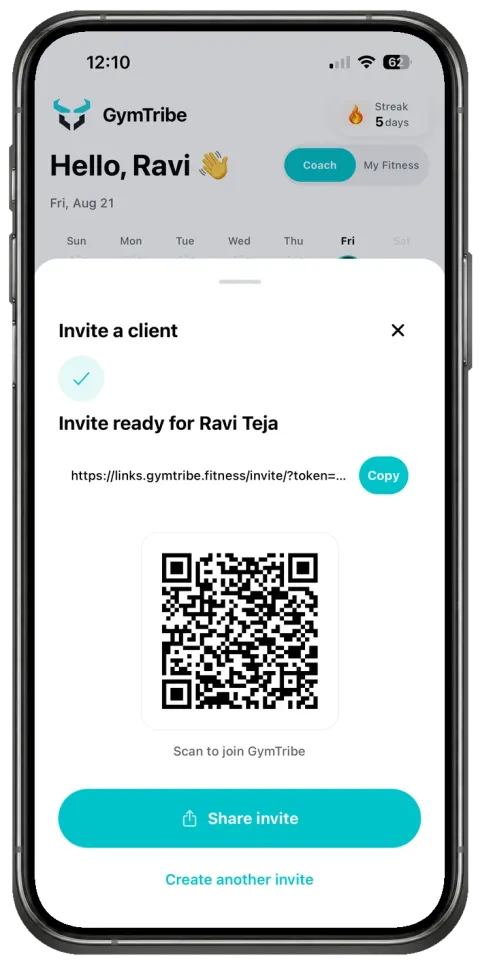
The client connection is private and explicit. Earlier history is not automatically shared, and clients can change what they share.
03 / Keep the workflow useful
Three practical habits for a lighter review.
- Review selected datesUse the day view to focus on the period you are coaching instead of scanning an unstructured lifetime history.
- Discuss the detailOpen the logged meal and talk through serving choices, patterns, or questions with the client rather than treating a dashboard signal as a verdict.
- Connect the next actionAdjust targets or build a workout when that is the appropriate coaching step. The client follows and logs the plan in their own app.
This makes accountability concrete: there is a record to review, a date to discuss, and a next step to agree on. It does not require pretending that software can replace the trainer-client relationship.
Keep the workflow honest
Visibility supports coaching; it does not automate it.
GymTribe does not provide trainer-client messaging, prescribed or auto-generated meal plans, clinical nutrition advice, or automated risk scoring. Trainers still decide what to discuss and what action is appropriate.