

Hack squat vs leg press
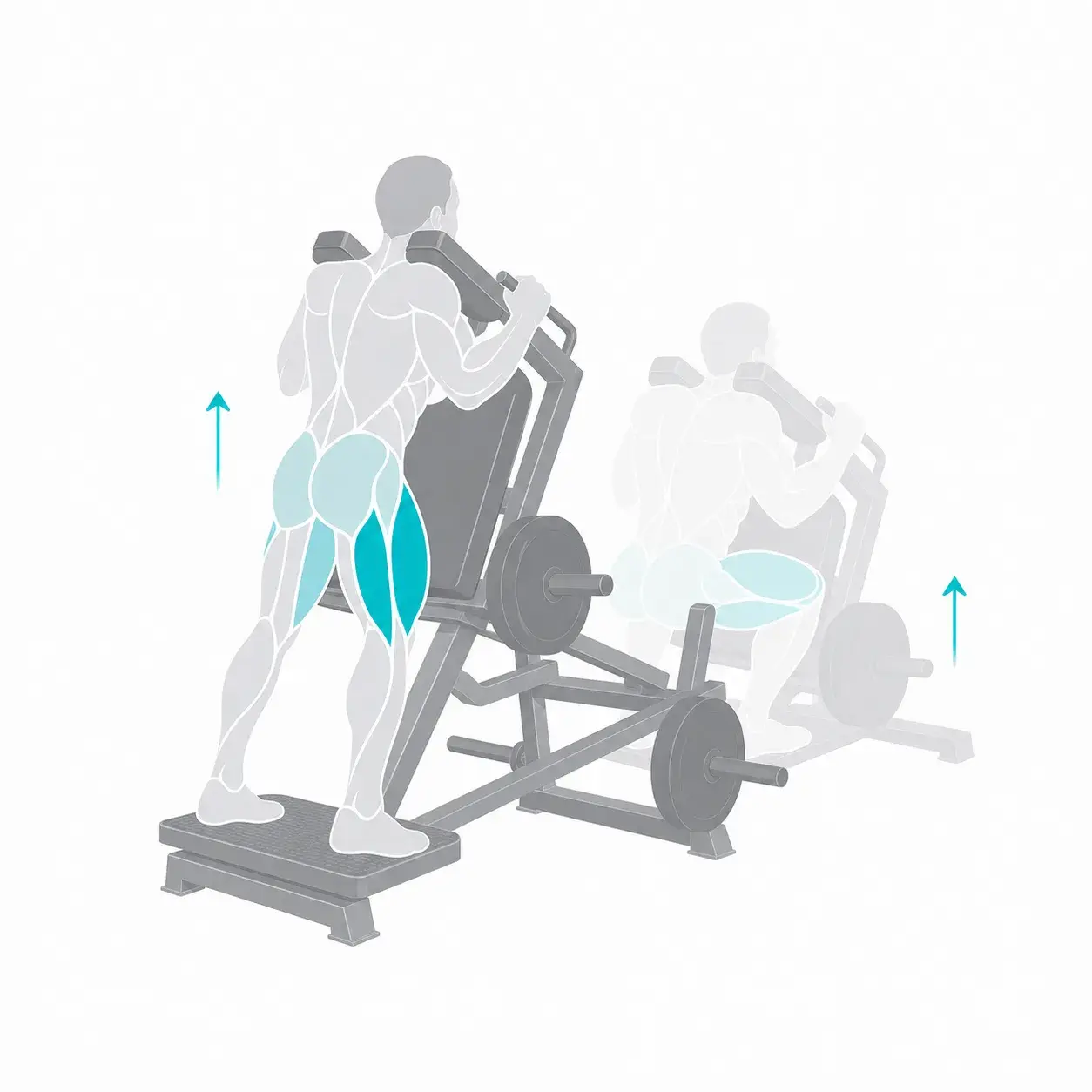
Both machines take balance out of a squat so the legs can work hard with the back supported. The hack squat stands you on a platform with the weight on your shoulders; the leg press lies you back and has you push a platform away. They look similar and feel quite different.
Short answer
Pick the hack squat to train the quads through a deep, squat-like range with your torso upright. Pick the leg press to move the most weight with the least skill, and to shift work between quads and glutes by moving your feet.

Side by side
| Hack squat | Leg press | |
|---|---|---|
| Target muscle in GymTribe | Quads | Quads |
| Also works | Glutes, Adductors | Glutes, Adductors, Hamstrings |
| Equipment | Hack squat machine | Leg press machine |
| Level in the app | Beginner | Beginner |
| Logged as | Weight and reps | Weight and reps |
What is different
- Body position
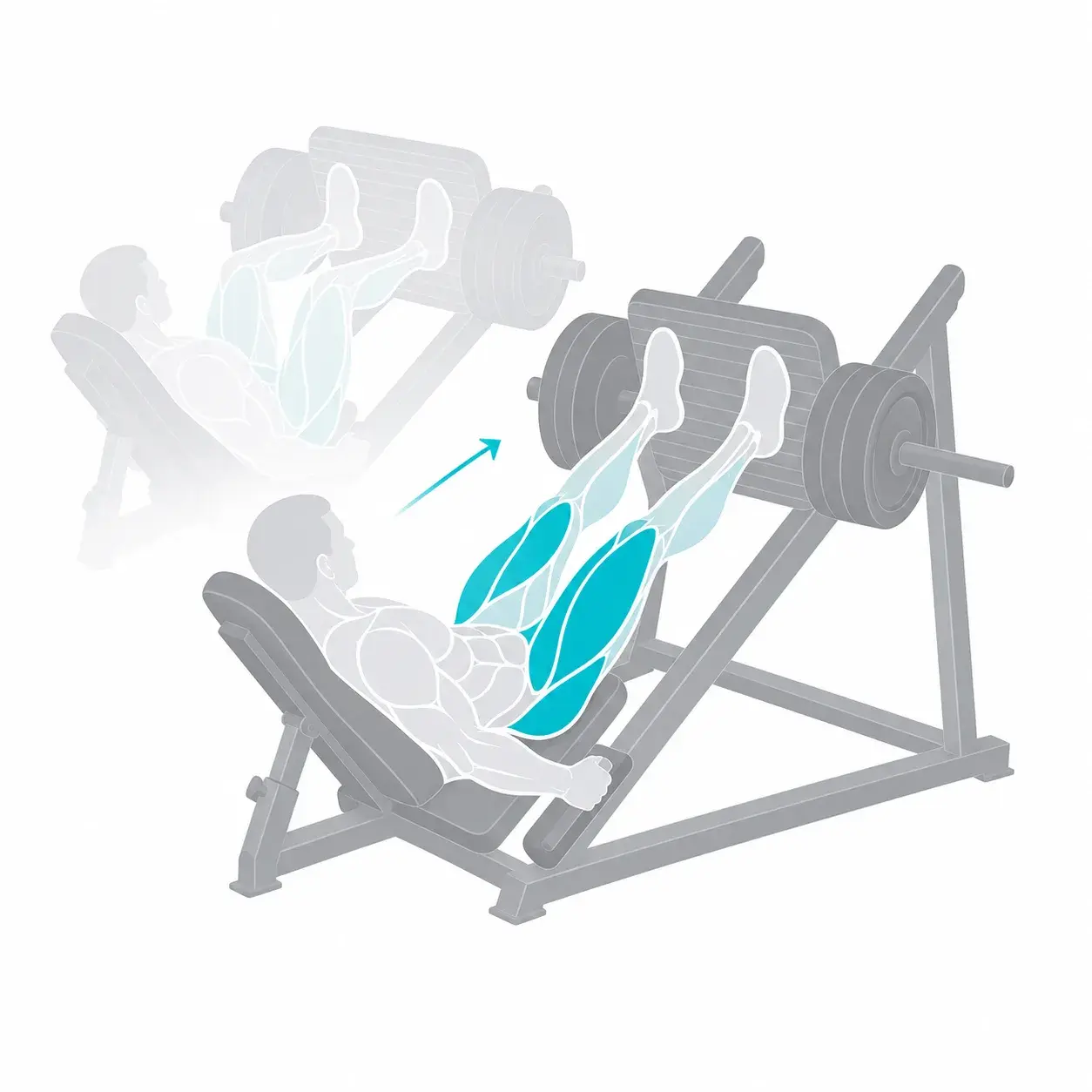
- On a hack squat the weight sits on your shoulders and you squat down and up on a sled, so the movement looks like a back squat with a fixed path. On a leg press you sit or lie back and push the platform away with your feet, with no load on the spine.
- Range of motion
- The hack squat usually allows a deeper knee bend, because the hips are free to drop below the knees. On most leg presses the hips are fixed in the seat, so depth is limited by how far you can bring the platform before the lower back lifts off the pad.
- Weight on the stack
- The leg press takes more weight for the same effort, since the platform angle and the seat do part of the work. Do not compare numbers between the two machines, or between leg presses in different gyms.
- Foot placement
- Both let you move your feet, but the leg press gives more range: feet high and wide shifts work toward the glutes and hamstrings, low and narrow toward the quads. The hack squat is quad-dominant in almost every stance.
Which one to pick
Pick the hack squat when…
- You want the quads trained through a full squat range without balancing a barbell.
- You are building toward, or around, a barbell back squat.
- You like a standing position and an upright torso.
Pick the leg press when…
- You want to load the legs heavy with the least technique to learn.
- You want to bias the glutes or hamstrings by changing foot position.
- You prefer no weight on your shoulders or spine.
Running both
On one leg day, do the harder, deeper one first, usually the hack squat for 6 to 10 reps, then the leg press for 10 to 15. On a second leg day, swap the order or drop one and add a lunge or split squat.
Track both and see which moves
Log the weight and reps of every set in GymTribe. Hack squat and leg press each keep their own charts and personal records, and the muscle map shows how many sets went to each muscle this week, so you can see which lift is doing the work for you.

More comparisons
- Romanian deadlift vs barbell deadlift →
- Barbell front squat vs barbell back squat →
- Sumo deadlift vs barbell deadlift →
- Chin-up vs pull-up →
Technique here is common practice, not a prescription. If a lift hurts, stop and ask a qualified coach or clinician.
Hack squat vs leg press: questions people ask
Is the hack squat or leg press better for quads?
Both train the quads hard. The hack squat tends to work them through a deeper range with the torso upright; the leg press lets you use more weight and shift the emphasis with foot position. Many lifters do both.
Which is easier on the lower back?
The leg press puts no load on the shoulders or spine, which is why people with a tired back often choose it. Keep the lower back on the pad; letting it round at the bottom is the main thing to watch on a leg press.
Can I replace squats with a hack squat or leg press?
For building leg muscle, yes, either works. For the skill and strength of a barbell squat, no: they remove the balance and trunk work that the squat trains.
Why can I leg press so much more than I hack squat?
The platform angle, the seat and the lack of balance all mean the stack weight is not the weight your legs feel. Track each machine against itself in GymTribe rather than comparing them.