How to track protein: a daily target, a few easy sources, and a simple routine.
Of everything you can track in food, protein is the easiest to get value from. It has a target you can work out in a minute, it comes from a short list of foods, and you can check it at midday and still fix the day. Here is how to set a target and track it without logging every bite.
3 min read
01 / The target
Start from grams per kilogram of body weight.
| Situation | Grams per kg | For 75 kg |
|---|---|---|
| Mostly sitting, little or no training | 0.8 to 1.0 | 60 to 75 g |
| Active, training a few times a week | 1.2 to 1.6 | 90 to 120 g |
| Building muscle or strength | 1.6 to 2.2 | 120 to 165 g |
Multiply your body weight in kilograms by the range. The protein calculator does this for kilograms or pounds, and the macro calculator turns it into a full day of targets.
These are general ranges, not medical advice. If you have a kidney condition, are pregnant, or follow a medically supervised diet, ask your doctor or dietitian for your number.
02 / Where it comes from
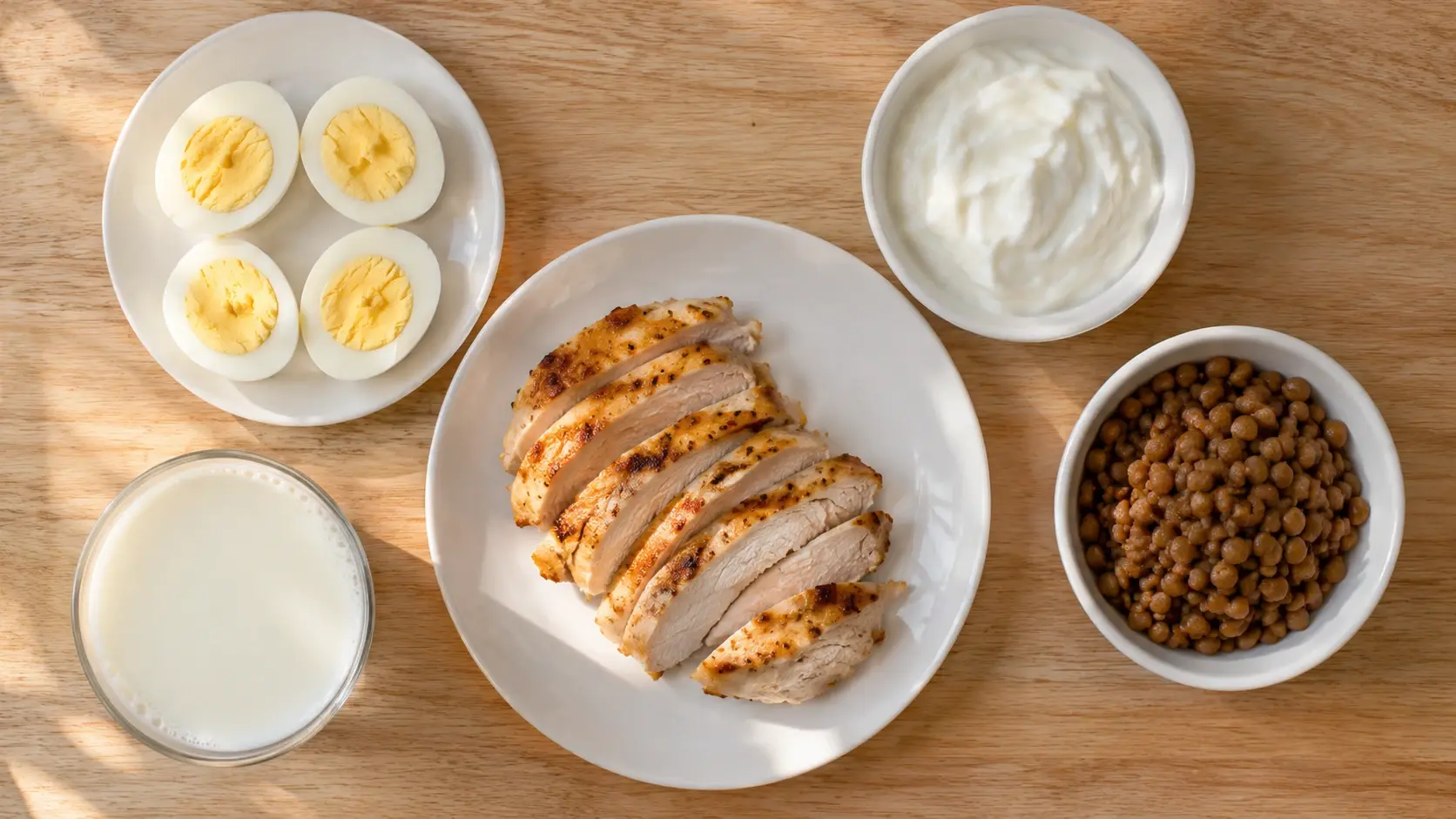
A handful of foods does most of the work.
| Food | Portion | Protein |
|---|---|---|
| Chicken breast, cooked | 100 g | about 31 g |
| Egg | 1 large | about 6 g |
| Greek yogurt, plain, nonfat | 170 g | about 17 g |
| Lentils, cooked | 1 cup | about 18 g |
| Milk | 1 cup | about 8 g |
Typical values from USDA FoodData Central; brands, cuts and recipes differ, so check the label when there is one. More detail in the chicken breast, egg and Greek yogurt posts, and the high-protein vegetarian recipes.
03 / The routine
Log protein first, and everything else when you can.
- Set the target once. Use the range for your situation and round it to a number you can remember.
- Log the protein-heavy part of each meal. The chicken, eggs, dal or yogurt. Sauces and sides can wait.
- Check at midday. If you are far behind, you still have two meals to fix it.
- Fill the gap with one item. A glass of milk or a tub of yogurt is easier to plan than a new meal.
- Judge the week, not the day. Hitting your range most days is the goal.
Spreading protein over three or four meals is a common habit, not a rule. A 120 g day over four meals is about 30 g each.
04 / In GymTribe
Protein beside calories, against your own target.
GymTribe shows calories, protein, carbs, fat, fiber, sodium and sugar against daily targets you set. Log from the food catalog, a barcode or by hand, or photograph or describe a meal and review the estimate before saving. Foods you cook often can be saved as your own with their protein, and logged in one tap.
The morning brief reads your own logs, protein among them, and suggests a next step. For the whole picture, How to track macros covers carbs and fat, and How to start tracking food without being perfect covers the habit.
In short
One number, checked at midday.
Pick a target, log the protein-heavy part of each meal and look at the total before dinner. GymTribe's protein and macro tracker keeps the running total against your target. This is general nutrition information, not medical advice.