

T-bar row vs barbell row
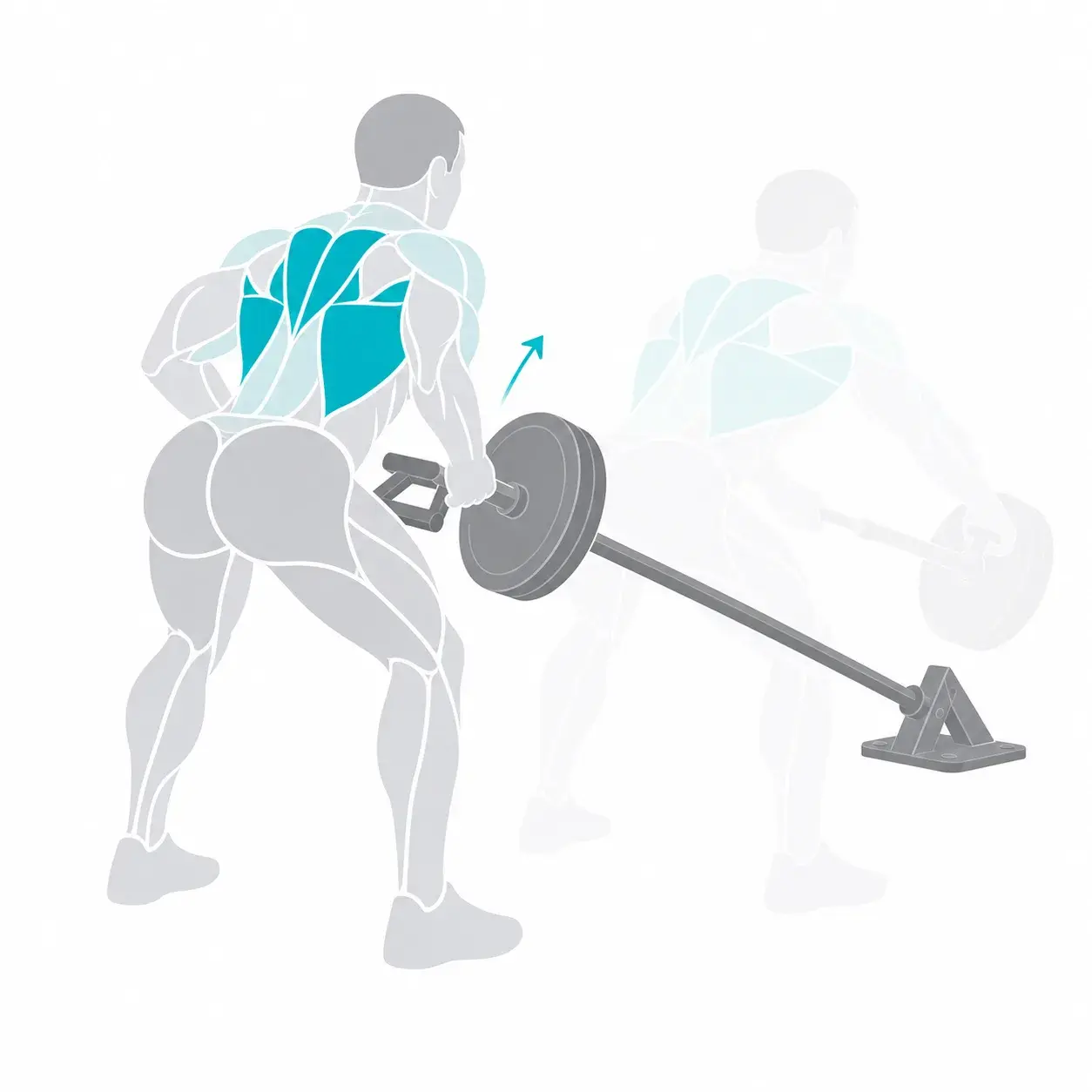
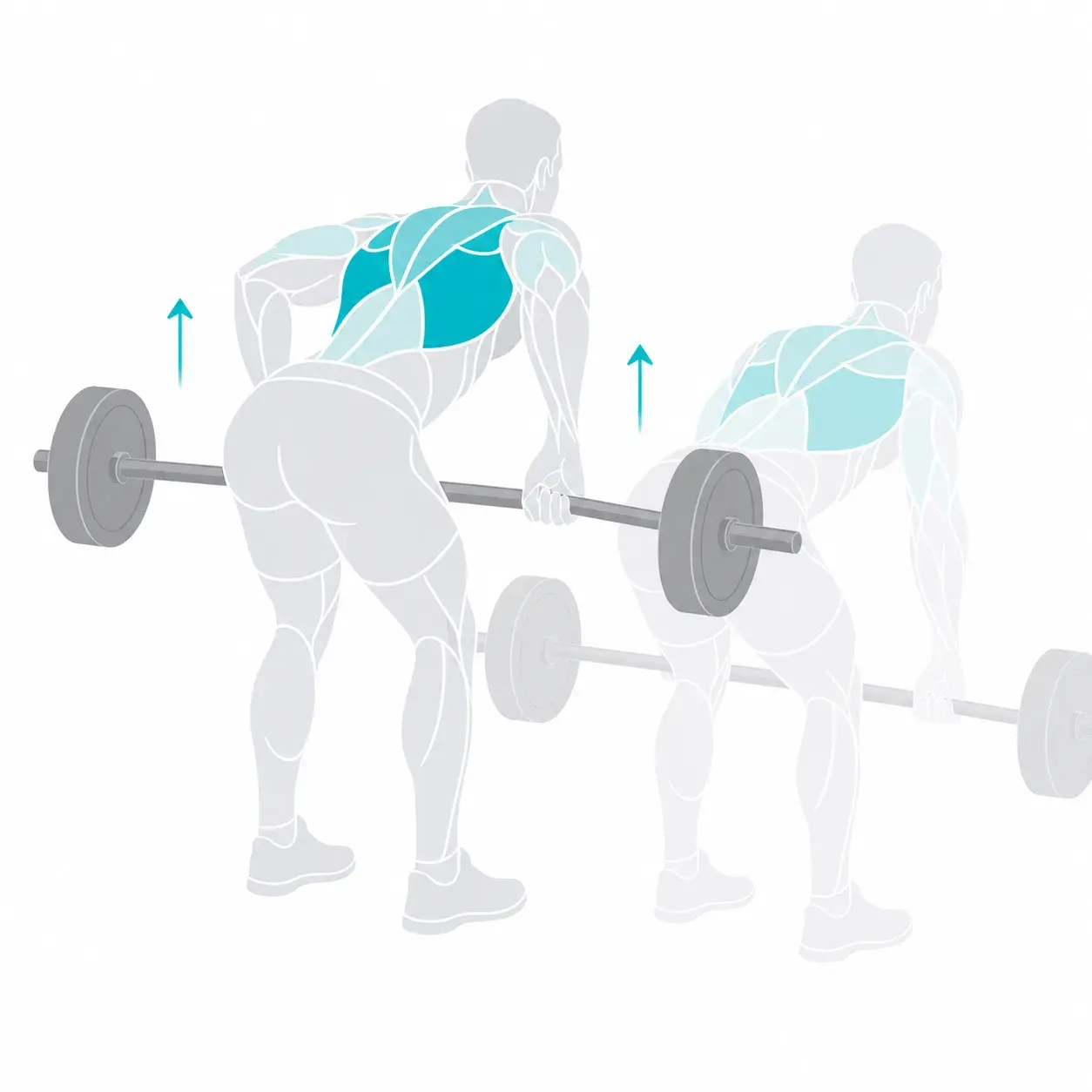
Both are bent-over rows that target the upper back in GymTribe, with the lats, rear delts, biceps and lower back helping. The barbell row pulls a free bar to your stomach; the T-bar row pulls one end of a bar that is anchored at the other end, usually with a close-grip handle.
Short answer
Pick the barbell row for a free-weight row you can do in any gym and load in small steps. Pick the T-bar row for a steadier pull, an easier close grip and often more weight. Both build the upper back; use whichever lets you keep a flat back and a still torso.





Side by side
| T-bar row | Barbell bent-over row | |
|---|---|---|
| Target muscle in GymTribe | Upper back | Upper back |
| Also works | Lats, Rear delts, Biceps, Lower back | Lats, Rear delts, Biceps, Lower back |
| Equipment | T-bar row station, or a landmine with a close-grip handle | Barbell and plates |
| Level in the app | Intermediate | Intermediate |
| Logged as | Weight and reps | Weight and reps |
What is different
- Bar path
- With a free barbell, you control the bar's path and it has to clear your knees on every rep. On a T-bar or landmine, the anchored end guides the bar in an arc, so the path is steadier and you can focus on squeezing the shoulder blades.
- Grip
- The barbell row uses a wide, overhand grip on a straight bar. The T-bar row usually uses a close, neutral grip with the palms facing each other, which many lifters find easier on the wrists and elbows.
- Lower-back demand
- Both make the lower back hold you bent over. On the barbell row the whole load hangs from your hands; on the T-bar the anchored end carries part of it, and chest-supported T-bar machines take the lower back out almost completely.
- Equipment
- The barbell row needs only a bar and plates. The T-bar row needs a T-bar station, or a landmine and a close-grip handle, which not every gym has.
Which one to pick
Pick the T-bar row when…
- Your gym has a T-bar station or landmine with a close-grip handle.
- You want a steadier row that is easier to keep strict as the weight goes up.
- A wide overhand grip bothers your wrists or elbows.
Pick the barbell row when…
- You want a row you can do in any gym with just a barbell.
- You want to load in small steps and track the same lift for months.
- You want the wider grip that brings in more of the upper back and rear delts.
Running both
Most programs use one heavy row for 6 to 10 reps and a lighter pull after it, such as a seated cable row or lat pulldown. Swap the barbell row and the T-bar row every few blocks, and log them as separate exercises so their numbers stay comparable.
Track both and see which moves
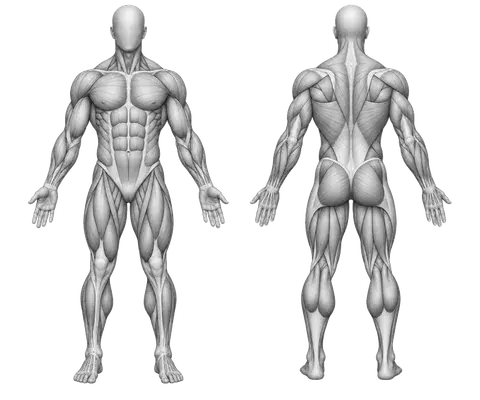
Log the weight and reps of every set in GymTribe. T-bar row and barbell bent-over row each keep their own charts and personal records, and the muscle map shows how many sets went to each muscle this week, so you can see which lift is doing the work for you.

More comparisons
- Romanian deadlift vs barbell deadlift →
- Hack squat vs leg press →
- Barbell front squat vs barbell back squat →
- Sumo deadlift vs barbell deadlift →
Technique here is common practice, not a prescription. If a lift hurts, stop and ask a qualified coach or clinician.
T-bar row vs barbell row: questions people ask
Can you replace the barbell row with the T-bar row?
Yes. Both target the upper back with the same helpers. The T-bar row is usually steadier and allows a close grip; the barbell row needs less equipment. Pick the one you can do with a flat back.
Is the T-bar row the best back exercise?
It is one of the most common heavy rows, but no single exercise is best. A good back routine has a row like the T-bar or barbell row plus a vertical pull such as the pull-up or lat pulldown.
Why can I lift more on the T-bar row?
The anchored end of the bar carries part of the load and guides the path, and the close grip lets your arms pull at a strong angle. Machines and landmines differ, so compare T-bar numbers only on the same setup.
What does GymTribe count rows toward?
Both count toward the upper back in the muscle map, with the lats, rear delts, biceps and lower back as helpers, and each keeps its own history and estimated 1RM.