

Push pull legs workout plan
Push pull legs (PPL) splits your training by movement. Push day trains the chest, shoulders and triceps; pull day the back, rear delts and biceps; leg day the quads, hamstrings, glutes and calves. Because each day trains muscles that work together, one day's soreness rarely gets in the way of the next.
Short answer
Run it 3 days a week (Monday, Wednesday, Friday) if you are newer or busy, and 6 days a week once you recover well and want more volume. The exercises stay the same; only how often you repeat them changes.
- Days a week
- 3 or 6
- Length
- 8 weeks
- Level
- Beginner to intermediate
- Equipment
- Full gym
- Goal
- Muscle and strength
Your week
- MonPush
- TueRest
- WedPull
- ThuRest
- FriLegs
- SatRest
- SunRest
- MonPush
- TuePull
- WedLegs
- ThuPush
- FriPull
- SatLegs
- SunRest
The workouts
Exercise names are the ones in the GymTribe library. Tap one for its guide: the muscles it works, how to do it and common mistakes.
Push
Chest, shoulders, triceps
| Exercise | Sets | Reps | Rest |
|---|---|---|---|
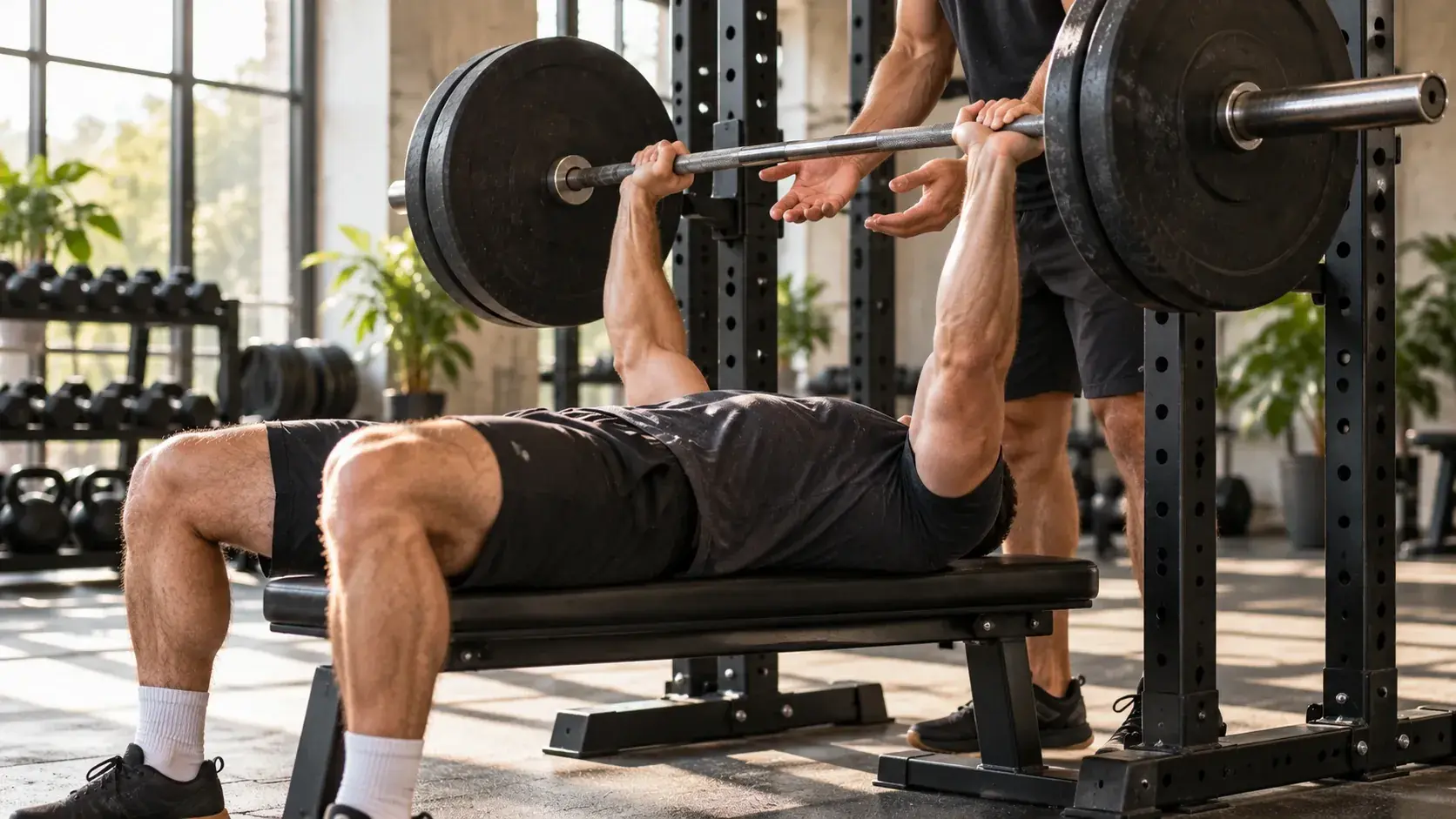
| Bench Press | 3 | 6–8 | 2–3 min |
| Incline Dumbbell Bench Press | 3 | 8–12 | 2 min |
| Shoulder Press | 3 | 8–12 | 2 min |
| Dumbbell Lateral Raise | 3 | 12–15 | 1 min |
| Cable Rope Pushdown | 3 | 10–15 | 1 min |
| Overhead Cable Rope Extension | 2 | 10–15 | 1 min |
Pull
Back, rear delts, biceps
| Exercise | Sets | Reps | Rest |
|---|---|---|---|
| Lat Pulldown | 3 | 8–12 | 2 min |
| Row | 3 | 6–10 | 2–3 min |
| Seated Cable Row | 3 | 10–12 | 2 min |
| Cable Face Pull | 3 | 12–15 | 1 min |
| Standing Barbell Curl | 3 | 8–12 | 1 min |
| Dumbbell Hammer Curl | 2 | 10–12 | 1 min |
Legs
Quads, hamstrings, glutes, calves
| Exercise | Sets | Reps | Rest |
|---|---|---|---|
| High-Bar Back Squat | 3 | 5–8 | 3 min |
| Romanian Deadlift | 3 | 8–10 | 2–3 min |
| Leg Press | 3 | 10–12 | 2 min |
| Lying Leg Curl | 3 | 10–15 | 1 min |
| Standing Calf Raise | 3 | 10–15 | 1 min |
| Forearm Plank | 2 | 30 s hold | 1 min |
How to progress
- Start lighter than you think
- In week 1, pick weights that leave about 3 reps in the tank on every set. You learn the movements, find your numbers, and give yourself room to add weight for weeks instead of stalling in the second session.
- Add reps, then weight
- Each exercise has a rep range. Keep the weight the same and add reps each session. When every set reaches the top of the range, add the smallest jump your gym allows (about 2.5 kg or 5 lb on upper-body lifts, 5 kg or 10 lb on squats and deadlifts) and build back up from the bottom of the range.
- Going to 6 days
- When the 3-day version feels easy to recover from for a few weeks, repeat the cycle: push, pull, legs, push, pull, legs, rest. Keep the same exercises and weights; you are adding a second exposure, not starting over. If you feel run down after two weeks, go back to 3 or 4 days.
- Repeating a session still counts
- After a short night or a hard week, repeat last session's weights instead of adding more. If an exercise stalls for three or four sessions in a row, change one thing: a lighter week, a different rep range, or more rest between sets.
Who it suits
- You can train 3 days a week now and may want to move to 6 later without learning a new plan.
- You like each session to have a clear theme, so you always know what today is.
- You train in a gym with a bench, barbell, dumbbells and cables.
Swaps
- No cable station
- Swap rope pushdowns for dumbbell overhead extensions, face pulls for bent-over dumbbell reverse flies, and the cable row for a chest-supported dumbbell row.
- Squats bother you today
- Use the leg press or hack squat as the first exercise and keep the rest of leg day the same.
- You can do pull-ups
- Swap the lat pulldown for pull-ups, and log the reps. When you can do 12, add weight or slow the lowering down.
Run this plan in GymTribe
Make one routine for each workout above. During a session, each set shows what you lifted last time and a target for today, so you know whether to add a rep or add weight. Every exercise keeps its own charts and personal records, and the muscle map shows how many sets each muscle got this week. Food, sleep and steps sit in the same app.

More workout plans
- Upper lower split: a 4-day workout plan →
- 3 day workout split →
- Full body workout plan →
- How to pick a workout split →
This is general training information, not a prescription. If an exercise hurts, stop and ask a qualified coach or clinician, and check with a professional before starting if you have an injury or a health condition.
Push pull legs: questions people ask
Is push pull legs good for beginners?
Yes, run 3 days a week. Each muscle gets one focused session a week, the days are easy to remember, and you can move to 6 days later. If you have never lifted, the beginner gym plan on this site starts even simpler with machines and full-body days.
Should I do push pull legs 3 or 6 days a week?
Start with 3. Six days trains each muscle twice a week, which many lifters prefer for muscle, but it only helps if you recover between sessions. Move up when 3 days has felt easy for a few weeks.
What muscles does each day train?
Push: chest, shoulders and triceps. Pull: lats, upper back, rear delts and biceps. Legs: quads, hamstrings, glutes and calves, with a plank for the core.
How long should I run this program?
Eight weeks is a good first block. Then keep the structure and swap one or two exercises per day, or keep everything if your weights are still going up.
What order should the days go in?
Push, pull, legs. Pull after push means your back and biceps are fresh after a day that worked the chest and triceps, and legs come last so your upper body has two days off.
Can I put legs first?
Yes. Any order works as long as you keep it. Some people put legs first so the hardest day lands after the weekend.
How many sets per muscle is this?
On the 3-day version, about 6 to 9 hard sets per main muscle each week. On 6 days it doubles to 12 to 18, which is why the 6-day version needs better recovery.
How much should I rest between sets?
Two to three minutes on the first heavy lift of each day, about two minutes on the next ones, and a minute on raises, curls and pushdowns. Resting long enough to repeat your reps matters more than keeping the session short.
What if I miss a day?
Do the missed day next time and carry on in order. On the 3-day version the week simply shifts; you never need to double up.
Do I need to train to failure?
No. Finish most sets with one or two clean reps left. Going to failure on the last set of a raise or curl is fine; on squats and rows it mostly makes the next sets worse.
Where are the abs?
Leg day ends with planks. Squats, rows and presses also make the core work. If you want more, add hanging knee raises or crunches at the end of any day.
Can I do push pull legs at home?
With adjustable dumbbells and a bench, yes: dumbbell presses for the barbell bench, dumbbell rows for cable and barbell rows, and goblet squats or lunges on leg day.
Can I run this program on GymTribe's free plan?
Yes. Make a routine for push, pull and legs; the free plan keeps 4 routines active. Each set you log shows what you did last time, so you know whether to add a rep or add weight.
How do I track push pull legs in GymTribe?
Start the day's routine and log the weight and reps of every set. Each exercise keeps its own history and personal records, and the muscle map shows how many sets each muscle got this week.